

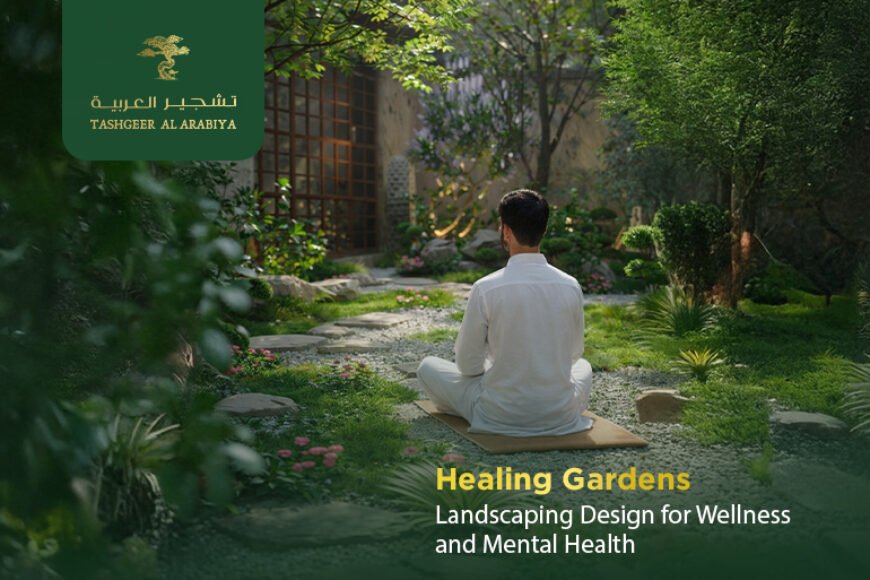
Healing Gardens: Landscaping Design for Wellness and Mental Health
- February 26, 2026
- 0 Comment
Research confirms that nature reduces stress, lowers blood pressure, and promotes emotional balance.
Gardens provide:
• Gentle sensory stimulation
• Connection to natural rhythms
• A sense of accomplishment
• Space for reflection and calm
Whether you’re creating a wellness garden for a residential villa, a therapeutic space for a healthcare facility, or simply want your home garden to support better mental health, thoughtful design makes all the difference.
Creating truly healing spaces requires understanding which elements most powerfully impact our psychological and emotional states.
• Flowing water for calming sound
Water features rank among the most therapeutic additions. Flowing water produces white noise that masks urban sounds while the visual movement draws attention in a meditative way that quiets anxious thoughts.
• Semi-enclosed spaces for safety
Enclosed or semi-enclosed spaces create feelings of safety and refuge that our nervous systems need to fully relax.
• Fragrant plants like lavender and rosemary
Fragrant plants engage the olfactory sense most directly connected to emotion and memory. Scents like lavender, rosemary, and jasmine carry particularly strong associations with relaxation and peace.
• Curved pathways and soft forms
Smooth, circular forms in pathways and planting beds feel more calming than angular geometry. However, some people find clean lines and order soothing, highlighting the importance of personalizing designs to individual preferences.
• Comfortable seating positioned for optimal light
Position seating areas to capture morning light, afternoon shade, or evening views. These provide destinations that invite lingering and contemplation rather than just passage through space.
Healing gardens should feel natural — never clinical.
• Lavender for relaxation
Lavender tops most lists for its calming fragrance and beautiful flowers.
• Rosemary for clarity and memory
Rosemary stimulates memory and concentration while offering year-round structure and culinary uses.
• Chamomile for softness
Chamomile—whether ground-covering varieties or upright forms—provides both visual softness and practical herbal benefits.
• Ornamental grasses for calming movement
Ornamental grasses introduce movement that many find mesmerizing and calming.
• Native plants to support biodiversity
Planting native plants helps support biodiversity by providing natural habitat and food sources for local wildlife, pollinators, and beneficial insects.
• Edible plants for sensory engagement
Edible plants offer therapeutic benefits of growing food, harvesting, and the sensory pleasure of eating something you nurtured from seed or seedling.
Professional landscaping services help identify which therapeutic plants suit your specific growing conditions while creating combinations that offer benefits across all seasons. We consider our regional climate, your maintenance preferences, and your specific wellness goals.
Inclusive design ensures healing outdoor spaces remain accessible to everyone regardless of physical abilities.
Healing spaces must be accessible to all.
• Wide, smooth pathways
• Raised beds
• Adaptive container gardens
• Automated irrigation
• Frequent seating
• Strong lighting
Universal design principles ensure inclusivity without compromising beauty.
We design therapeutic gardens for healthcare facilities, senior living communities, and private residences that serve all abilities.
Color psychology significantly influences how outdoor spaces impact our emotional states, though responses vary based on personal associations and cultural backgrounds.
The Psychology of Color
• Blues and purples for calm
• Soft pinks for tranquility
• Warm tones for energy
• Green as the grounding foundation
Limiting the palette maintains emotional harmony.
Consider seasonal variation. Fresh spring greens feel hopeful, rich summer tones provide fullness, autumn’s warm palette offers comfort, and winter’s subtle colors create contemplative quiet.
Professional landscaping services understand these color principles intuitively. We apply them in ways that support your specific wellness goals, whether for residential gardens, commercial landscapes, or therapeutic spaces.
Dedicated meditation areas provide physical anchors for practices that support mental health and spiritual wellbeing.
Effective meditation areas include:
• Partial enclosure
• Minimal visual clutter
• Comfortable seating
• Soft, warm lighting
• A clear focal point
These spaces anchor daily mindfulness practices. Experienced professionals help you identify the best location and create an atmosphere that supports rather than hinders your practice. We ensure this space becomes a treasured part of your daily routine, whether in residential villa gardens, wellness centers, or corporate landscapes.
Psychological safety extends beyond physical security to encompass the emotional comfort necessary for true relaxation and healing.
• Boundaries and scale:
Defined boundaries through walls, hedges, or fencing create containment that allows our nervous systems to relax.
Appropriate scale relationships—where plants, structures, and open spaces feel proportional rather than overwhelming—help us feel competent and in control of our environment.
• Connection and flexibility
Visibility from key viewing points, particularly from inside the house, allows us to maintain connection even when not physically in the garden.
• Privacy and transition:
Privacy from neighbors and passersby becomes essential for many people to feel comfortable expressing emotion or simply existing without performance.
Choose climate-appropriate plants, automate irrigation, mulch generously, and accept natural seasonal variation.
A therapeutic garden should nurture — not burden.
Interested in creating a wellness-focused landscape? Contact us to design a restorative outdoor environment tailored to your needs.
