

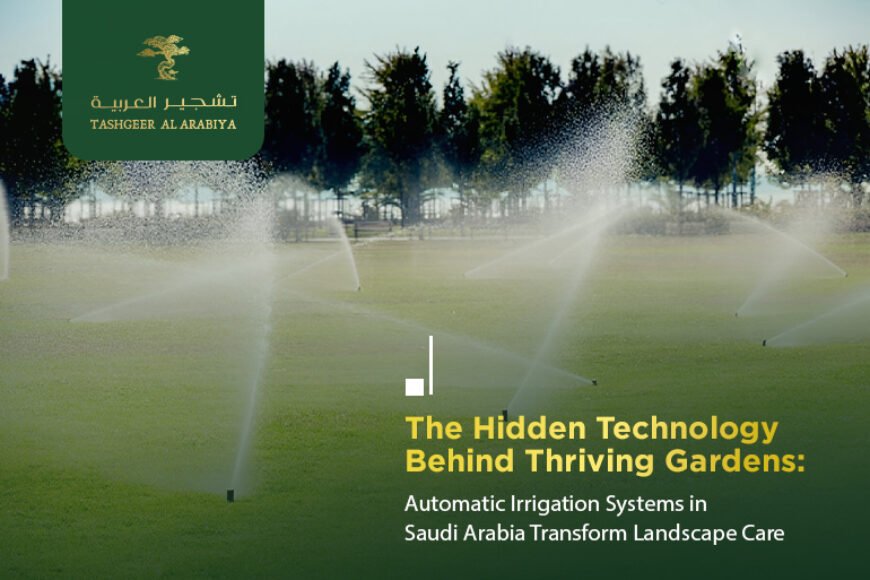
The Hidden Technology Behind Thriving Gardens: Automatic Irrigation Systems in Saudi Arabia Transform Landscape Care
- يناير 5, 2026
- 0 Comment
Walk through any spectacular Saudi garden and you will notice lush greenery, vibrant flowers, and healthy trees that seem to thrive effortlessly despite challenging climate conditions. What you won’t see is the sophisticated technology working behind the scenes to maintain this beauty. Automatic irrigation systems in Saudi Arabia represent the single most important investment for landscape success, transforming outdoor spaces from constant maintenance challenges into thriving, sustainable environments that require minimal attention.
The answer lies in Saudi Arabia’s unique climate realities. With minimal annual rainfall, intense summer heat, and evaporation rates that can exceed precipitation by tenfold, maintaining healthy landscapes through manual watering becomes nearly impossible. Even the most dedicated gardener cannot match the precision, consistency, and efficiency that modern irrigation technology provides.
Summer temperatures regularly exceed 45°C, creating conditions that quickly stress vegetation. Humidity levels vary dramatically between coastal and inland regions, affecting plant water needs. Seasonal temperature swings mean irrigation requirements in January differ completely from July demands. Automatic irrigation systems in Saudi Arabia solve these challenges through technology that monitors, adjusts, and delivers water with precision human oversight cannot match.
Beyond convenience, automatic systems deliver environmental and economic benefits. Properly designed irrigation reduces water consumption by 30-50% compared to manual watering. This conservation translates directly into lower utility bills while supporting national water sustainability goals.
Modern irrigation encompasses several technologies, each suited to specific applications. The most successful Saudi gardens typically employ multiple irrigation types, with different zones designed for different plant categories.
Drip irrigation represents the most efficient delivery method for most planted areas. Emitters placed directly at plant bases deliver water precisely where needed, minimizing evaporation and eliminating overspray onto paving. Modern drip technology offers remarkable flexibility with adjustable flow emitters that allow customization for each plant’s water needs.
Spray irrigation suits specific applications where drip systems prove impractical. Low-volume micro-sprays work well for densely planted flower beds. Rotary nozzles provide excellent coverage for larger open areas while using significantly less water than traditional spray heads.Bubbler systems excel for large trees and palms that need substantial water volumes. These devices flood root zones quickly, allowing deep penetration before surface evaporation becomes significant. Professional installation by specialists in automatic irrigation systems in Saudi Arabia ensures each plant receives optimal watering.
The controller represents your irrigation system’s brain, determining when and how long watering occurs. Traditional timer-based controllers operate on fixed schedules regardless of weather conditions. Smart controllers eliminate these inefficiencies through connectivity and intelligence that transform irrigation from scheduled task to responsive process.
Weather-based controllers adjust watering schedules automatically using local weather data. When temperatures rise or humidity drops, the controller extends watering duration. After rainfall, it delays irrigation until soil dries sufficiently. These adjustments happen automatically without any input from you.
Soil moisture sensor integration takes smart control even further. Sensors measure actual soil moisture levels, providing real-time feedback about plant water needs. The controller initiates irrigation only when soil moisture drops below optimal levels. This responsive approach ensures plants receive exactly what they need when they need it.Modern automatic irrigation systems in Saudi Arabia increasingly incorporate app-based control. Check system status from anywhere. Adjust schedules remotely. Receive alerts about issues like broken pipes. This connectivity provides unprecedented control and awareness of your irrigation system’s operation.
Technology alone cannot create effective irrigation. System design determines whether that technology delivers results. Proper design accounts for water pressure, flow rates, plant types, sun exposure, soil conditions, and dozens of other factors.
Hydrozoning represents the cornerstone of efficient irrigation design. This approach groups plants with similar water needs into the same irrigation zones, allowing tailored watering for each plant category. Drought-tolerant natives might water once weekly, while flowering shrubs water twice weekly.
Head spacing and placement determine whether watering occurs uniformly across planted areas. Professional designers calculate precise spacing based on each device’s coverage area, ensuring complete coverage without excessive waste.
Pressure regulation maintains consistent water delivery across your entire system. Filtration protects drip irrigation systems from clogging caused by particulates in water supplies. A skilled designer considers future maintenance access when laying out systems, ensuring valve boxes remain accessible and controllers stay reachable.
Successful irrigation design coordinates with all other landscape components from the project’s inception. Hardscape placement affects irrigation design significantly—pathways and patios create barriers requiring careful pipe routing around obstacles.
When designing areas around pools, irrigation systems require special attention to prevent overspray onto pool surfaces and deck areas. Water features require coordination with irrigation systems to avoid conflicts. Drainage integration ensures irrigation delivers water effectively without creating pooling or runoff issues.
Even the best-designed automatic irrigation systems in Saudi Arabia require regular maintenance to sustain peak performance. Seasonal system checks should occur at least twice annually. Technicians walk every irrigation zone while it runs, verifying that all devices function correctly and coverage remains uniform.
Controller programming requires periodic review and updating. As plants mature, their water needs may change. Seasonal transitions demand different schedules. Filter cleaning frequency depends on water quality and system type—drip irrigation filters may need monthly attention during peak season.
Professional maintenance contracts from qualified landscape specialists ensure your irrigation system receives attention without requiring your constant oversight. Scheduled visits catch problems early before they escalate into expensive failures.
Landscapes evolve over time as plants mature, family needs change, and design preferences shift. Quality irrigation systems accommodate these changes through thoughtful initial design and flexibility built into system infrastructure.
Oversizing main supply lines and installing extra valves during initial installation creates expansion capacity for future needs. Modular system design allows zone-by-zone modifications without affecting other areas. Technology upgrades prove simple with properly designed systems—replacing an old controller with a smart model requires only reconnecting wires.
The difference between systems that perform beautifully for decades and those that disappoint from the start often comes down to installation quality. Professional installation begins with accurate system design based on actual site conditions. Proper pipe sizing and routing require expertise that prevents pressure losses and ensures reliable operation.
Backflow prevention devices protect municipal water supplies and must meet local plumbing codes. Professional installers understand code requirements and install devices correctly. Perhaps most importantly, professional installation includes system testing and adjustment before handover—every zone runs while technicians verify coverage, check for leaks, and confirm controller programming.
Your landscape’s health depends fundamentally on consistent, appropriate watering. In Saudi Arabia’s challenging climate, this means embracing irrigation technology that works smarter than any human possibly could. Automatic irrigation systems in Saudi Arabia represent not just convenience but necessity for landscapes that thrive year after year. When designed by knowledgeable professionals who understand both technology and horticulture, installed by skilled technicians, and maintained by experts, automatic irrigation transforms your relationship with your garden. Water happens precisely when and where needed, plants flourish with minimal intervention, and you enjoy beautiful outdoor spaces without constant watering concerns.
