

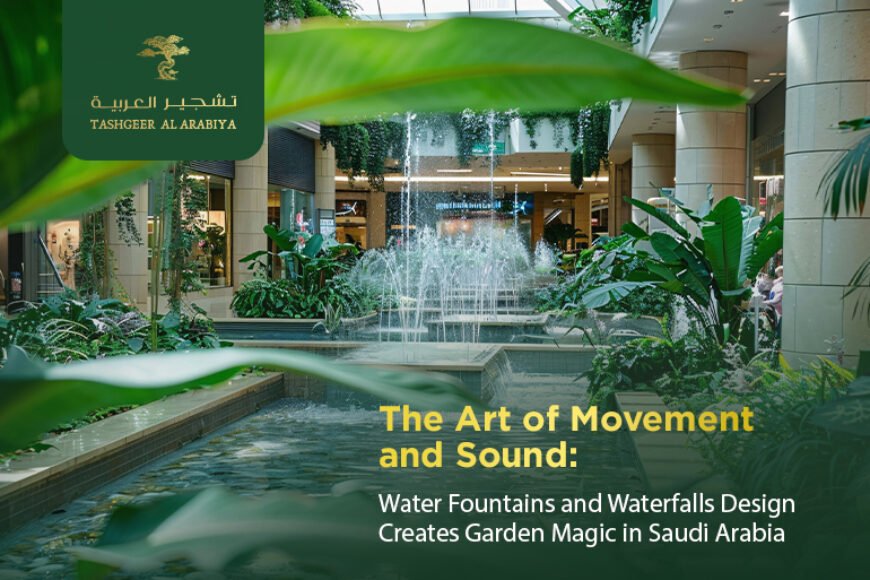
The Art of Movement and Sound: Water Fountains and Waterfalls Design Creates Garden Magic in Saudi Arabia
- يناير 7, 2026
- 0 Comment
In a landscape where water represents life itself, few design elements carry the power and significance of moving water. The sight of dancing fountains and cascading waterfalls transforms gardens from static compositions into living, breathing spaces filled with movement, sound, and emotional resonance. Water fountains and waterfalls design in Saudi Arabia bridges tradition and innovation, creating focal points that honor cultural heritage while embracing contemporary aesthetics and sustainable technologies.
Water has shaped Saudi culture and civilization for millennia. Historically, the presence of water determined where communities could thrive in desert environments. Gardens with fountains and pools became symbols of abundance, hospitality, and refined living. This deep cultural connection means water features in Saudi landscapes carry significance beyond mere decoration.
A fountain in your entrance courtyard welcomes guests with sounds and sights that signal comfort and generosity. A waterfall in your garden creates an oasis atmosphere that transports you from harsh desert environments to places of tranquility. These features connect modern Saudi homes to architectural traditions dating back centuries.Beyond cultural resonance, moving water provides practical benefits in hot, arid climates. Evaporative cooling from fountains and waterfalls reduces surrounding air temperatures by several degrees. The sound of moving water masks urban noise, providing acoustic privacy in residential neighborhoods. Water fountains and waterfalls design today balances traditional meanings and practical benefits with modern efficiency through recirculating systems, energy-efficient pumps, and smart controls.
Fountain styles range from formal traditional designs to contemporary minimalist statements. Selecting the right fountain type depends on your home’s architecture, garden style, available space, and personal preferences.
Formal tiered fountains create classic elegance that suits traditional architecture beautifully. Water cascades from upper basins to lower levels, creating layers of gentle sound and movement. These fountains work particularly well as centerpieces in entrance courtyards or formal garden rooms. Crafted from natural stone or carved marble, tiered fountains reference historical Islamic garden traditions while functioning reliably with modern pumping systems.
Wall fountains maximize impact in limited spaces. Water flows down decorative wall surfaces into collecting basins, creating focal points without consuming floor area. These features suit courtyard walls or garden boundaries. Contemporary wall fountains might feature clean stone sheets with water gliding smoothly downward, while traditional versions incorporate carved panels or tile work.
Urn and jar fountains offer versatility and cultural authenticity. Water bubbles from decorative vessels, overflowing into surrounding basins or disappearing into hidden reservoirs. Traditional ceramic jars reference historical water storage vessels, creating cultural connections while serving purely aesthetic purposes in modern gardens.Contemporary minimalist fountains embrace geometric forms and modern materials. Rectangular basins with still water surfaces broken by single central jets create zen-like calm. Linear rills with gentle water flow connect different garden areas. Water fountains and waterfalls design in contemporary styles proves especially effective in modern Saudi villas where clean lines dominate.
While fountains offer contained elegance, waterfalls bring drama and naturalistic beauty to Saudi gardens. These features range from subtle trickles to bold cascades, each creating unique atmospheres.
Natural stone waterfalls recreate the rare beauty of desert oases and mountain springs. Irregular stone placement creates authentic-looking formations where water tumbles naturally between rocks. These waterfalls integrate with planted surrounds, appearing as organic landscape elements. Native plants around natural waterfalls enhance authenticity while requiring minimal maintenance once established.
Sheer-descent waterfalls offer contemporary elegance through engineered perfection. Water flows smoothly over straight edges, creating glass-like sheets that fall into rectangular basins. Integrated LED lighting transforms sheer-descent waterfalls into dramatic nighttime focal points, with illuminated water sheets creating magical effects.
Stacked stone waterfalls provide middle ground between natural and formal approaches. Flat stones stacked horizontally create multiple levels where water cascades in controlled patterns. This technique allows custom configurations that fit specific spaces while maintaining relatively formal appearance.
Disappearing waterfalls maximize visual impact while minimizing pool requirements. Water flows over stone or architectural surfaces into hidden catch basins covered by decorative gravel. This approach creates waterfall effects without visible water collection areas, making features appropriate where children’s safety requires caution around water.
Material selection dramatically influences water feature appearance, longevity, and maintenance requirements. In Saudi Arabia’s harsh climate, materials must withstand intense UV exposure, extreme temperatures, and water quality variations while maintaining beauty.
Natural stone represents the traditional choice, offering authenticity and timeless beauty. Limestone provides warm tones and natural texture. Granite offers exceptional durability and color variety. Marble creates luxury statements with classic white or dramatic veined varieties. Each stone type brings unique character that complements different architectural styles.Contemporary water fountains and waterfalls design increasingly employs modern materials alongside traditional stone. Corten steel develops rich rust-colored patinas that contrast beautifully with water. Stainless steel maintains mirror-bright finishes that reflect surroundings. Glass tiles in basins catch light and add color accents. These materials enable design possibilities unavailable with natural stone alone.
Behind every beautiful fountain or waterfall lies technology that keeps water flowing reliably while minimizing energy consumption. Variable-speed pumps represent the most significant efficiency advance, adjusting flow rates to achieve desired effects while consuming only necessary power. This technology reduces operating costs by 50-70% compared to single-speed pumps.
Filtration systems maintain water clarity with minimal chemical intervention. Mechanical filters remove debris, while biological filters establish beneficial bacteria colonies. UV sterilizers eliminate algae without chemicals. Comprehensive filtration means your water feature maintains sparkling clarity month after month.
LED lighting transforms water features from daytime focal points into nighttime entertainment. Modern LED fixtures consume minimal electricity while producing brilliant illumination in any color. Underwater lights illuminate water from within, making fountains and waterfalls glow magically. Color-changing systems allow mood adjustments for different occasions.
Automation systems control all water feature aspects from smartphones. Program operating schedules that match your lifestyle. Adjust lighting scenes for different occasions. Monitor water levels and receive alerts if leaks develop. This technological integration makes water features effortless to enjoy.
Even the most beautiful fountain or waterfall disappoints if poorly positioned. Strategic placement ensures water features enhance your garden’s overall composition while providing maximum enjoyment.
Entrance courtyards represent traditional fountain locations. Water features here welcome guests immediately while masking street noise with pleasant sounds. Outdoor living areas benefit tremendously from nearby water features—a fountain adjacent to seating provides visual focal points and acoustic ambiance during gatherings. The evaporative cooling from moving water makes these spaces more comfortable.
View corridors from interior rooms deserve water feature consideration. Fountains or waterfalls positioned in direct sightlines become living artwork visible from dining rooms or living spaces. Garden termination points need visual weight to feel complete, and water features provide that gravitas perfectly.
Exceptional water fountains and waterfalls design never exists in isolation but integrates seamlessly with surrounding plants, hardscaping, and structures. Planting around water features requires thoughtful selection—plants should complement rather than compete while tolerating splashing and humidity.
Low-growing ground covers near fountain bases soften hard edges without blocking views. Dramatic plants like bird of paradise create tropical oasis atmospheres around naturalistic waterfalls. Architectural plants such as agaves reinforce contemporary fountain geometries. Fragrant plants near seating area water features add sensory layers, combining scent with sound and sight.
Hardscape materials should flow logically between water features and surrounding areas. Stone types used in waterfall construction might extend into adjacent walls or paving, creating visual connections that make water features feel integral to landscapes rather than added afterthoughts.
All water features need regular care to maintain beauty and function properly. Water quality management represents the primary ongoing concern. Modern filtration systems reduce chemical needs dramatically, though combination approaches—modest chemical use alongside quality filtration—often yield best results.
Debris removal prevents pump damage and maintains visual appeal. Skimming surface debris takes moments but prevents problems. Mineral deposits from evaporation and hard water create scale buildup on stone surfaces. Regular cleaning prevents heavy accumulation. Pump maintenance ensures reliable operation—most quality pumps require only periodic inspection and cleaning.
Given water scarcity concerns, some question whether water features belong in Saudi landscapes. The answer lies in technology and design approaches that make features sustainable. Recirculating systems mean water fountains and waterfalls design consume virtually no water beyond initial filling and evaporation replacement.
Smart controls reduce water consumption by operating features only when benefits justify use. Programming systems to run during evening hours when families enjoy gardens eliminates unnecessary operation. Rainwater harvesting can supply water features in regions experiencing occasional precipitation, reducing demand on municipal supplies.Your garden deserves focal points that engage multiple senses while honoring Saudi Arabia’s deep cultural relationship with water. Water fountains and waterfalls design creates these magical elements through combinations of traditional forms and contemporary technologies. When designed thoughtfully with attention to placement, materials, and sustainability, when built with quality equipment, and when maintained with consistent care, water features become defining elements that elevate your entire garden—transforming outdoor spaces from simple yards into true oases worthy of Saudi Arabia’s garden traditions.
