
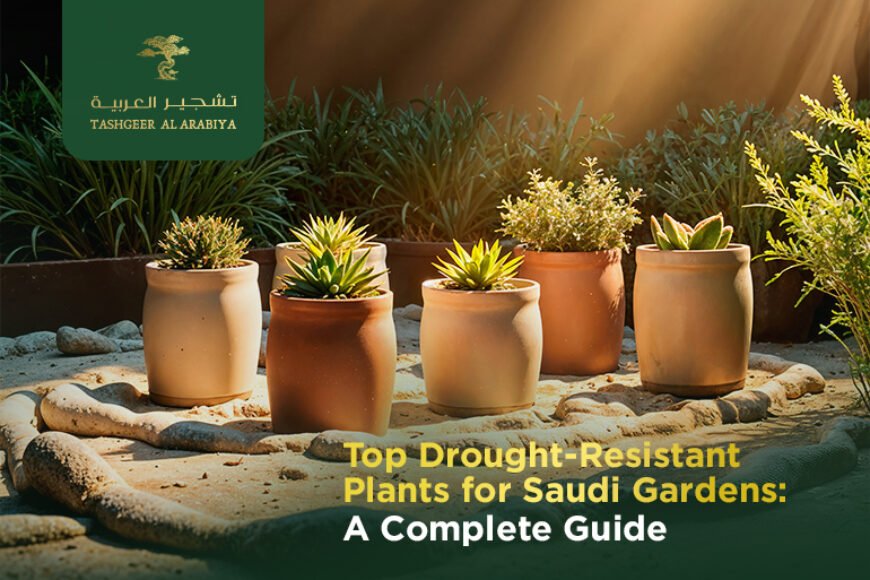
Top Drought Resistant Plants for Saudi Gardens: A Complete Guide
- أبريل 10, 2026
- 0 Comment
Saudi Arabia is one of the most beautiful and challenging environments in the world for gardening. The heat is intense, the rainfall is scarce, and the soil — in many regions — is sandy and nutrient-poor. And yet, the desire for lush, green outdoor spaces remains strong.
The good news? There are hundreds of plants that thrive naturally in these conditions. Choosing the right drought resistant plants in Saudi Arabia is the foundation of any successful low water landscaping in the Kingdom. And when done well, these gardens can look every bit as stunning as their water-hungry counterparts.
At Tashgeer Al Arabiya, we’ve spent years working with plants that love the Saudi climate — and we’re excited to share our favourites with you.
Before we dive into the plant list, let’s talk about why this matters.
Water is one of the most precious resources in Saudi Arabia. Choosing low water landscaping plants isn’t just about saving money on water bills — it’s about being responsible with a finite resource. As Vision 2030 pushes sustainability forward across the Kingdom, landscape choices are increasingly part of that conversation.Beyond sustainability, drought resistant plants in Saudi Arabia are simply easier to maintain. They’ve evolved to survive tough conditions, which means less babying, less intervention, and more resilience through the harsh summer months.
Without question, bougainvillea is one of the most beloved plants across Saudi Arabia. It’s hardy, fast-growing, and produces spectacular blooms in shades of pink, orange, red, and white. Once established, it requires very little water and thrives in full sun.
Ideal for: fences, walls, pergolas, and creating dramatic colour in any garden.
The date palm is not just a symbol of Saudi Arabia — it’s an extraordinary drought resistant plant that has sustained civilisations for thousands of years. It roots deeply into the earth to find water and can withstand extreme heat with minimal irrigation once established.
Ideal for: formal garden features, shade creation, and cultural authenticity in desert plants KSA landscapes.
The Ghaf tree is considered a sacred desert tree across the Arabian Peninsula. It’s extremely hardy, requires almost no watering once established, and provides shade and structure to the landscape. It’s also nitrogen-fixing, which means it enriches the soil around it.
Ideal for: large gardens, parks, and open public spaces.
Fragrant, beautiful, and surprisingly tough, Arabian jasmine is a favourite in Saudi home gardens. It produces small white flowers with an intoxicating scent and can be trained as a climber or left as a bushy shrub. It tolerates heat well and needs moderate (not excessive) water.
Ideal for: courtyard walls, entrance trellises, and sensory gardens.
A beloved plant from Mediterranean climates, lavender is perfectly suited to drought resistant plants lists. It’s aromatic, beautiful, and incredibly low maintenance. Lavender thrives in dry, sunny conditions and well-drained soil.
Ideal for: borders, pathways, and herb gardens.
Salvia species are excellent performers in hot, dry conditions. They come in many varieties — from ornamental purple-flowered types to culinary sage — and are genuinely loved by bees and butterflies. They’re easy to grow, low water, and bring life to any garden.
Ideal for: mixed borders, butterfly gardens, and edible gardens.
Agaves are striking, architectural plants that need almost no care once established. They store water in their thick, fleshy leaves and can survive months without rainfall. As desert plants KSA gardens benefit from, agaves add bold structure and a contemporary look.
Ideal for: statement planting, rock gardens, and modern landscapes.
Perhaps the most versatile plant on this list, aloe vera is part of virtually every Saudi garden at some level. It requires almost no water, grows in poor soils, and has incredible medicinal properties. It also produces beautiful orange-red flowers in spring.
Ideal for: borders, container planting, and medicinal gardens.
Oleander is widely used in Saudi Arabia’s public landscaping — and for good reason. It’s hardy, fast-growing, produces gorgeous flowers, and tolerates poor soils, heat, and drought. Note that all parts of the plant are toxic, so it’s best used in gardens away from children and pets.
Ideal for: boundary hedges, roadside planting, and large commercial spaces.
The Sidr tree has deep roots in Saudi culture and religion. It’s a medium-sized, drought-tolerant tree that produces small, edible fruits. It’s one of the finest drought resistant plants Saudi Arabia has to offer, with deep cultural significance and strong environmental credentials.
Ideal for: traditional gardens, heritage landscapes, and fruit-bearing green spaces.
Even tough, drought-resistant plants need proper care when first planted. Here’s how to give them the best start:
One of the most beautiful aspects of low water landscaping plants is the incredible variety available. You don’t have to sacrifice colour, fragrance, or texture — you simply choose smarter plants.
A well-designed Saudi garden might combine:
The result is a garden that looks lush and intentional, uses a fraction of the water of a conventional garden, and requires minimal maintenance to stay beautiful year-round.
Choosing the right drought resistant plants in Saudi Arabia for your specific conditions requires expertise. The soil type, sun exposure, microclimate, and proximity to other plants all affect how well each species will perform. Working with a professional landscaping team like Tashgeer Al Arabiya ensures you get the best results — beautiful gardens that are also genuinely sustainable.
Want a garden that’s beautiful, water-wise, and built for the Saudi climate? Reach out to Tashgeer Al Arabiya today. Our plant experts will help you select and design a landscape that thrives naturally — call us or visit tashgeer-sa.com to get started.
